When Ghanaian journalist Noah Dameh was relentlessly harassed – targeted by police, dragged to court, and driven to failing health – for exposing a business magnate’s exploitative monopoly over the Songor Lagoon salt mine on Ghana’s eastern coast, it was the Media Foundation for West Africa (MFWA) that took on his reporting to ensure he was not silenced, even after his death.
The MFWA has had to navigate its mission simultaneously in democratic and autocratic states in the region, operating in ever-shifting political and media environments.
Dameh began receiving texts from Ghana’s Criminal Investigative Department in response to his reporting in May 2022. The first message invited him to come to the police station over a Facebook post drawing attention to the activities of the salt-mining company – and its CEO – that had been awarded a contentious 39 000-acre mining concession for West Africa’s largest salt deposit.
He argued that the company was depriving the local Ada communities of their traditional salt mining livelihood, and that police and security forces responded with brutality against locals when they protested.
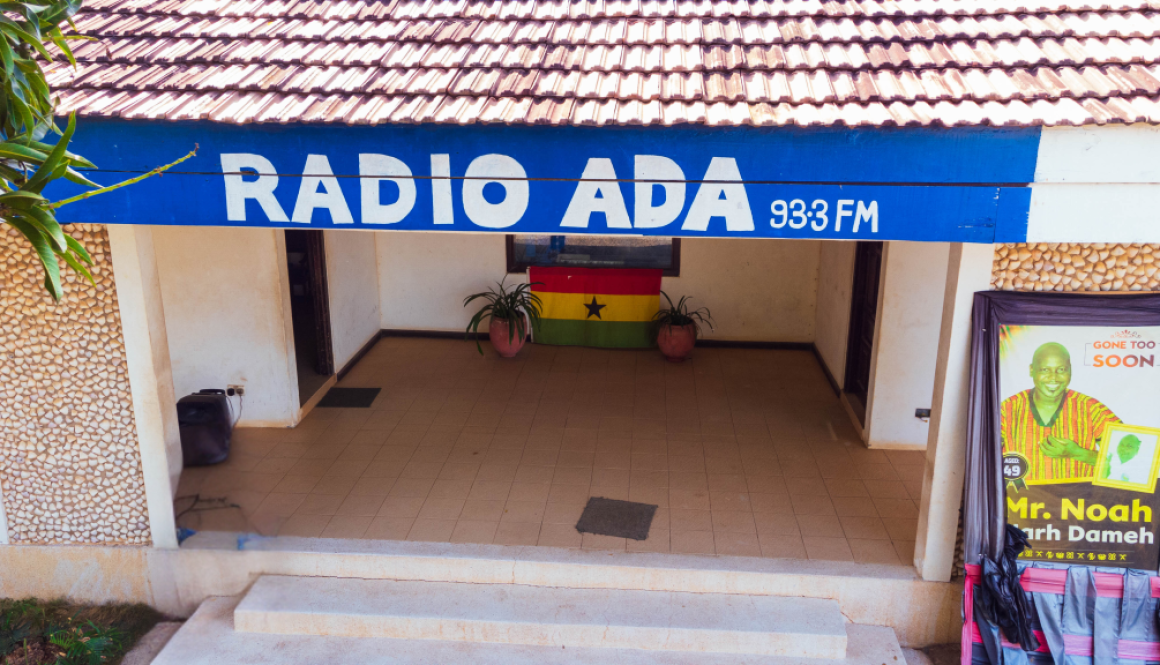
A veteran journalist with the local radio station Radio Ada, Dameh continued to report on corruption, exploitation and human rights abuses against Ada residents, including arbitrary arrests, detentions, brutality and prosecutions
He faced a long legal battle for his reporting, including a defamation lawsuit, various arrests and detentions, and criminal charges for ‘publishing false information’.
In March 2023, he was jailed for a week without access to medication for his chronic health conditions. That same month, the MFWA petitioned Ghana’s Attorney General to intervene. But Dameh died in September 2023 after prolonged health issues, at the age of 49, just days before the trial had been set.
‘If one day they hear that I have died a mysterious death, it is about the Songor Lagoon,’ Dameh said in a video recording a few months before his death. ‘That issue is what would have put me into the grave because of the frequent harassment, persecution, prosecution, and putting me behind bars.’
Noah Dameh
After Dameh died, MFWA continued to amplify his reporting and call attention to the pattern of abuse against Ada residents. Through its reporting, the MFWA found that the contract given to the businessman contravened a 1991 legal agreement for salt mining in Ghana, stipulating that artisanal salt miners would henceforth not be sidelined from any contract made with a private company.
‘On the back of our story, the citizens were able to go back to the salt mine because the public became aware,’ says Kwaku Asante, programme manager for the independent journalism project at MFWA. ‘[The businessman] could no longer push them, attack them, and harm them with thugs and policemen.’
‘Worsening conditions’
‘The rise of authoritarianism across West Africa and even in Africa, and worsening conditions, have made it very difficult for media houses to do the very critical reporting, the accountability journalism we expect them to do.’ – MFWA Programme Manager Kwaku Asante
The MFWA — a GIJN member since 2024 — is a regional non-governmental organisation based in Ghana’s capital, Accra, with national partner organisations in 15 other West African countries. It works to defend press freedom and amplify the voices of journalists who report on the powerful – through law and reform advocacy, engaging its regional network, and publishing reports and articles, among other areas of focus such as good governance or digital rights.
It currently operates with a core staff of 24, in addition to researchers and correspondents across West Africa.
Founded in 1997 by Ghanaian professor and consultant Kwame Karikari to defend freedom of expression, the Foundation has had to navigate its mission simultaneously in democratic and autocratic states in the region, operating in ever-shifting political and media environments.
Protecting the right to free speech in these spaces requires diverse approaches. There have been at least 13 successful coups in West Africa since MFWA was founded — with a notable surge in recent years.
The 2025 Reporters Without Borders World Press Freedom Index noted the erosion of press freedom in West Africa, with many countries in the region falling in the rankings, as well as the declining security situation in the Sahel region.
By 2027, the foundation will have been around for three decades, protecting journalists from persecution and helping them get published by shielding them from political blowback.
‘With our engagement with our partner organisations in those respective countries, we are able to get information out,’ says Dora Boamah Mawutor, programme director for MFWA’s freedom of expression and digital rights programmes. ‘We believe that there must be a peaceful West Africa, where everyone has the right to express himself or herself freely.’
Karikari started MFWA four years into Ghana’s return to democratic governance – when, after more than 30 years of military and one-party rule, elections were held in January 1992.
At that time, there were five countries in the West African subregion led by oppressive military regimes – 28 years later, that number has reduced by only one, after coups have resulted in one-party or military rule in Burkina Faso, Guinea, Mali, and Niger. These political realities show the enduring need for MFWA.
Karikari’s initial idea was for the organisation to defend press freedom across West Africa, including Mauritania, but the foundation has evolved to do more, such as providing legal services to imprisoned reporters through its network of lawyers, and publishing crucial investigations that would have been too risky for local newsrooms to take on
‘Increasingly, the rise of authoritarianism across West Africa and even in Africa, and worsening conditions, have made it very difficult for media houses to do the very critical reporting, the accountability journalism we expect them to do,’ Asante says.
Supporting targeted journalists
In military-ruled Burkina Faso, the assault on press freedom has intensified under the military government led by Ibrahim Traoré, creating an atmosphere of fear and repression for journalists daring to speak out. MFWA is one of the few press freedom organisations helping journalists to continue reporting on the junta.
To further silence the press, journalists in Burkina Faso are being conscripted into the military, which MFWA’s Mawutor explained has set the stage for the erosion of press freedom across the wider Sahel region.
MFWA expanded its work further in 2021 when it launched The Fourth Estate, a public interest newsroom that publishes daring investigations that often puts journalists in the crosshairs of politicians.
On 24 March 2025, Guezouma Sanogo, president of the Burkina Faso Journalists Association (AJB), was abducted by plainclothes intelligence officers, three days after holding a press conference to call for an end to the repressive treatment of journalists in Burkina Faso.
Sanogo would later appear in an online video, his head shaved and wearing military fatigues. Previously, three other journalists had been forcibly conscripted in the same way.
Mawutor explains that her organisation must be strategic to maintain communication with independent media in these military states. For example, MFWA keeps ties with journalists in exile from Burkina Faso and helps shelter them from their oppressive governments, such as by communicating through mulitple chains so conversations can’t be tracked or tapped.
In June 2020, MFWA collaborated with other press freedom organisations to secure the release of Ignace Sossou, a Beninese reporter who was arrested for allegedly quoting a government official out of context. Their advocacy helped shave off 12 months from Sossou’s 18-month sentence.
‘I cannot thank the MFWA enough for the consistent advocacy you embarked on, which contributed to my successful appeal and subsequent release from detention,’ Sossou said during a visit to MFWA’s offices after his release. ‘
The prison conditions were terrible, but your fight on my behalf, alongside the efforts of other press freedom organizations, always kept my spirit up.’
PICTURE: Radio Ada journalist Noah Dameh, an ardent critic of a deal which was depriving local communities on Ghana’s eastern coast of their traditional livelihood, predicted his own death in an interview in MFWA’s public interest newsroom, The Fourth Estate, four months before his death. This is a front view of Radio Ada’s headquarters
A media company linked to Egyptian authorities suspended three prominent television programmes after their hosts criticised the government and road safety failures, raising concerns about media control by state-aligned entities
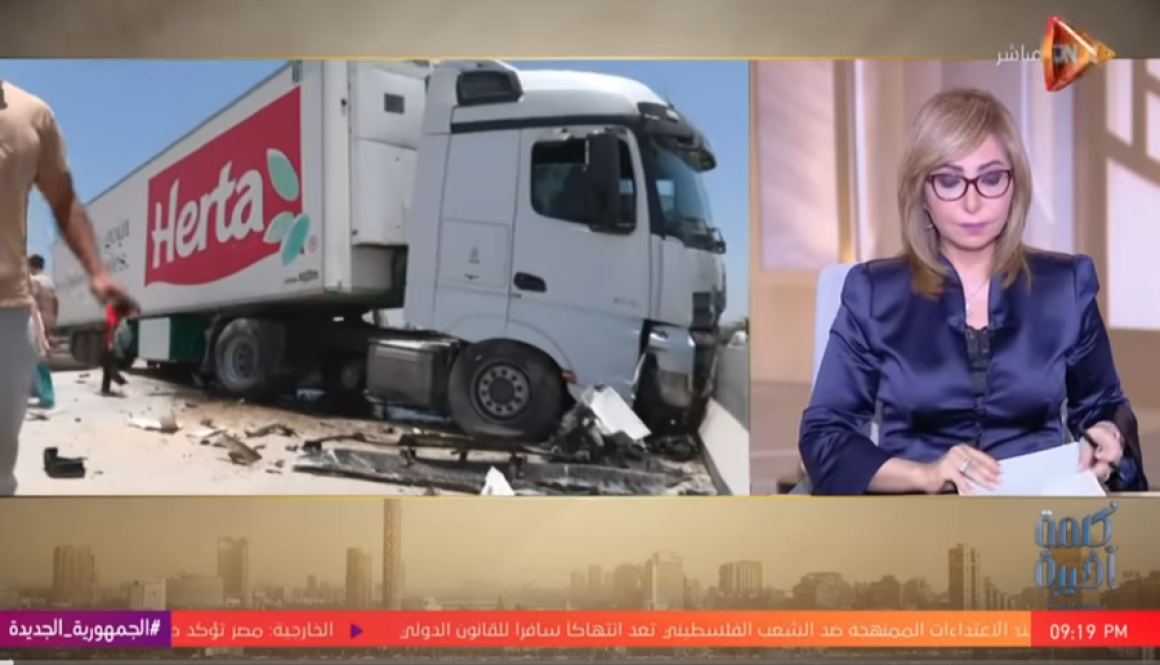
On 16 July, United Media Services (UMS), a company owned and closely linked to Egypt’s General Intelligence Service, terminated its contract with veteran journalist Lamis El Hadidy. Her ON TV talk show, Kelma Akheera (‘Final Word’), had been off the air since early July.
Independent Egyptian outlets El-Manassa and Saheeh Masr reported that the firing and cancellation were due to El Hadidy’s violation of editorial red lines by mentioning military companies and government responsibility for a road crash that killed 19 people, mostly teenage girls.
Separately, on 6 July, journalist Khairy Ramadan’s show, Ma’a Khairy (‘With Khairy’), on Al-Mehwar TV, which is part of a media coalition led by UMS, was abruptly cut off mid-episode, also because he reported on the road accident. The programme featured truck drivers blaming poor road conditions for frequent accidents.
Ramadan was ordered to cut to an unscheduled commercial break, and the show has not aired since.
In another case of apparent retaliation, sources told London-based newspaper Al-Araby Al-Jadeed that Cairo-based channel Al-Qahera Wal Nas – also part of the UMS coalition – recently decided to terminate TV host Ibrahim Eissa’s contract after he launched a YouTube channel featuring indirect criticism of the government.
‘These suspensions reveal the Egyptian government’s intolerance of journalism that crosses political red lines or questions state performance,’ said Sara Qudah, CPJ’s regional director. ‘Journalists must be able to hold officials accountable without fear of censorship or retaliation’
Toronto-based exiled Egyptian journalist and media commentator Mostafa Al-A’sar told the CPJ, ‘Egypt’s media is tightly controlled by the security apparatus. Journalists who stray from the official narrative face sanctions — even if they work for security-owned outlets’.
CPJ emailed UMS for comment but received no response.
PICTURE: Lamis El Hadidy was fired after she discussed the military and government culpability on her show, Kelma Akheera (‘Final Word’) (Lamiskelmaakhera/YouTube)
The Committee to Protect Journalists calls on Liberian authorities to ensure justice for journalist Alex Seryea Yormie, who was abducted for several hours and brutalised by members of a local traditional society in northeastern Nimba county.
On 30 June, the men abducted Yormie while he was on his way back to the community-based Lar-Wehyi radio station, shortly after he read on air a government order suspending activities of the Poro society, the journalist told CPJ.
The Poro is a centuries-old men’s society that traditionally enforces community laws. Their rituals still shape lives in rural areas, although they have been criticised for human rights abuses
‘The abduction and brutal attack on journalist Alex Seryea Yormie are grave reminders of the dangers the media face in Liberia from powerful non-state groups,’ said CPJ Regional Director Angela Quintal.
‘Authorities must continue to investigate the incident and guarantee the safety of the press to report on sensitive subjects without facing retaliatory attacks.’
Yormie told CPJ that nine assailants carried him to their office, where about 30 members of the group beat him with their hands, before taking him to another location, where they beat him with sticks, stripped him naked, and tied his genitals with ropes.
After two hours, the men took Yormie to another location where they beat him for a further two hours, and then took him to a fourth site, where police intervened and rescued him, the journalist said.
Yormie told CPJ he received medical treatment for cuts all over his body.
On 1 July, a Poro leader, Melvin Duo, was arrested. On 14 July, Duo was charged with ‘recklessly endangering someone, simple assault and felonious restraint’, the journalist told CPJ, but the case was adjourned because Yormie was injured in an unrelated accident and will resume once he recovers.
CPJ’s calls and text messages to request comment from Duo and police spokesperson Cecelia Clarke received no response.
PICTURE: Journalist Alex Seryea Yormie was abducted on his way back to the Lar-Wehyi radio station after reading a government order on the air (News from Liberia/YouTube)
At the close of the recent African Ministerial Conference on the Environment (AMCEN) in Nairobi, the International Press Institute (IPI) calls on policymakers to prioritise the indispensable role of climate and environmental journalism in achieving the continent’s environmental goals.
From 14 to 18 July, the conference was hosted in Nairobi, Kenya, under the theme, ‘Four Decades of Environmental Action in Africa: Reflecting on the Past and Imagining the Future’. The conference, which marked its 40th anniversary, informs Africa’s positions and goals regarding climate and the environment.
Journalists reporting on climate and the environment provide critical news and information about issues often affecting the most vulnerable populations, from extreme weather events to deforestation, biodiversity loss to water scarcity, and the adverse effects of extractive industries.
These and other challenges have far-reaching consequences for livelihoods, security and sustainable development, and robust, fact-based, independent journalism is essential to addressing these challenges
The media plays an indispensable role in informing the public, holding governments and businesses accountable, and driving meaningful action and policy responses. Quality reporting on climate and the environment is also beneficial to Member States in various ways, including to national security, trade and investment and food security, among others.
Yet across Africa, journalists covering critical environmental and climate-related stories face attacks, abuse, and harassment. These attacks – including physical threats and violence, legal harassment, censorship, access restrictions and targeted disinformation fuelling mistrust in the media – impede the public’s right to news and information as well as the search for sustainable solutions.
‘To truly tackle the environmental crises that Africa is battling with, we must collectively champion the safety and security of journalists who contribute to an informed public and accountable leadership through their climate and environmental reporting,’ said Nompilo Simanje, IPI’s Africa Advocacy and Engagement Lead
AMCEN is recognised as ‘Africa’s foremost ministerial-level body on environmental governance, providing political guidance and regional leadership to promote sound environmental management and sustainable development practices in all member states’.
As one of the priorities for the 2025 conference also focused on leveraging the upcoming G-20 to address Africa’s environmental challenges, IPI urges the Ministers to include safeguarding climate and environmental journalism as one of their key priorities for the G-20 and the rest of the continent.
Specifically, we urge AMCEN to:
recognise the importance of reliable information for climate action and the role of the media in facilitating access to genuine and truthful information
prioritise the safety and security of journalists, including against disinformation attacks aimed at undermining their reporting
support efforts to create an enabling legal and operational environment where journalists can carry out their work without fear of reprisal, especially through SLAPPS by multinational corporations and other businesses
strengthen mechanisms for ensuring journalists have unhindered access to information, data, and relevant stakeholders, fostering transparency and accountability in environmental governance
strengthen and support efforts urging national authorities to improve accountability for harassment and violence against journalists covering climate and the environment
As a foreigner, it’s easy to land in trouble in Equatorial Guinea. A careless snap of a photo or a minor misstep in the maze of officialdom, with all its arbitrary permits and paperwork, quickly invites suspicion.
I found this out the hard way one morning during a week-long reporting trip a few months ago. My driver and I were exploring Ciudad de la Paz — the country’s planned new capital that was never completed and is now a ghost town.
As we were riding along wide, empty boulevards and clambering over abandoned construction sites looking for worthy photo opportunities, I was — unbeknownst to my driver — looking for signs of a Portuguese construction company I was writing about. It was a still, muggy day, and a haunting silence filled every gap in our conversation.
We encountered only the occasional herder from a nearby village or worker at one of the few institutions running in and around Ciudad de la Paz. At some point we walked into a cluster of buildings overgrown with weeds next to a disused stadium. That would make for good pictures — the contrast of opulence and neglect was a neat metaphor for the story I was working on.
There were no signs warning us away from the area, but a security guard had spotted us. He was immediately hostile, speaking only with my driver and accusing us of attempted theft. Just what he thought we had wanted to steal from an abandoned building was unclear.
As my driver tried to reason with him, I was on my phone quickly sending a message to the South African Embassy and my employer before the quite likely scenario that I was arrested and had my phone confiscated.
A short while later, when it was clear that the security guard wasn’t letting go of the idea that we were thieves, four Kalashnikov-wielding police officers led by an aggressive young captain sped up to us in an old red unmarked sedan.
After a brief discussion with the security guard, they put me in the back of the car, sandwiching me between two of them. I wasn’t handcuffed, nor were my possessions confiscated, but I was hauled off to a village police station a short drive away. The spartan blue wooden building was little more than a glorified shed with an old desk, a few benches and a couple of dingy holding cells.
None of the officers would say much about why we had been arrested, but from what I could make out from their conversations and the vague bits of information they offered me, we were being accused, variously, of attempting to steal something — I never understood what — of trespassing, and of being in a restricted area without a permit.
But my bigger concern was that some officious policeman, steeped in the state’s paranoia and keen to ingratiate himself with his superiors, would try to concoct a story that I was a spy.
For now, I was told to sit on a bench and wait for the district police commissioner. Every time a car pulled up, I would anxiously peer through the window to see whether it was the commissioner — the man who would determine what happened next.
I was in the country to report a story based on leaked documents connecting the son of Equatorial Guinea’s longtime dictator with the Portuguese construction firm Zagope, a subsidiary of Brazilian giant Andrade Gutierrez.
From 2009 until at least 2012, Zagope bagged state infrastructure contracts worth over $1-billion. In turn, leaked documents show, between 2014 and 2018 the firm channelled over $86-million to Somagui, a supposed forestry company belonging to the dictator’s son, Teodoro Nguema Obiang Mangue, known as Teodorin.
Cases in France and the United States laid bare Teodorin’s notoriety for corruption. The main character in our investigation — and deputy to his father, the president — Teodorin is widely thought to be the real power behind the dictatorship.
Almost no one in Equatorial Guinea, on the west coast of central Africa, knew the real reason I was there, not even my driver — in whom the police had little interest but who had accompanied me to the station and probably thought I was a tourist with a bizarre penchant for construction sites.
Reporting in Equatorial Guinea carries serious risks. There is no free media in the country, and criticising the ruling regime or documenting the country’s persistent poverty from within is a sure path to problems
Activists, journalists and political dissidents face intense state repression and the threat of abductions, torture, disappearance and death. Even abroad they are not safe, with well-documented cases of regime critics being abducted in foreign countries.
And here I was, a foreign journalist working for a Western media outfit. That afforded me added layers of protection, but I also knew how quickly things could turn.
Before I began working on the story, I didn’t know much about Equatorial Guinea, other than that it was a tiny, oil-rich former Spanish colony. I did know, though, that the Obiang regime was legendary for its excess and violence. So as far as safety was concerned, I was well prepared.
I had spoken at length with colleagues at ICIJ and our media partners about how best to manage the risks: which contacts to have on hand and what communication protocols to follow.
I’d given plenty of thought to reporting an investigative story in a country that does not tolerate independent journalists
I would enter the country on a tourist visa, ostensibly as one of those rare intrepid travellers who venture to Equatorial Guinea. (Thankfully, the numerous stamps in my passport, including from many African countries, lent credibility to that cover story.)
One dilemma was about which passport to use for my visa application. I’m a dual national and could apply using either my South African or British passport. South Africa has an embassy in the country. That would surely help. On the other hand, the Obiang regime has made a habit of arbitrarily arresting South African citizens.
In fact, while I was in Equatorial Guinea, two South Africans were languishing in the country’s notorious prisons on trumped-up drug charges. They were being used as diplomatic bargaining chips after South African authorities seized some of Teodorin’s assets.
The asset seizures were in connection with a damages claim brought by another South African citizen whom Teodorin had arrested over a business deal that went awry. In the end, we decided it would be more prudent to use my UK passport.
Hazards aside, on-the-ground reporting adds meaning and helps bring life to otherwise dry forensic investigations. And to truly comprehend the scale of the looting by the Equatorial Guinean elite, the lost opportunities, and the repercussions for ordinary people in this tiny, little-known and very closed-off country, we at ICIJ felt that I had to come here and witness it up close.
On top of that, we wanted further proof of what we had seen in the leaked documents.
Our story, in collaboration with media partners in Portugal, France and Brazil, as well as Equatorial Guinean reporters in exile, exposed the connection between Teodorin and Zagope while highlighting a larger issue: how Equatorial Guinea, an impoverished country with a horrendous human rights record, became one of the fastest-growing economies in the world after the discovery of oil in the 1990s.
The government then squandered its resources, building absurdly ostentatious projects while ignoring the needs of its citizens and trampling over their rights.
Case in point: my hotel on the outskirts of the envisioned new capital, the Grand Hotel Djibloho. ‘Grand’ is an understatement. The hotel boasts over 400 plush rooms, a small suburb of VIP villas and a private wing for the exclusive use of the first family — along with a perfectly manicured 18-hole golf course, indoor and outdoor pools, gyms, spas, bars, an enormous marble-clad lobby and ornate dining areas.
An enthusiastic hotel staffer showed me around a state-of-the-art conference area that looked like it could have been built for the United Nations General Assembly.
While the Grand Hotel Djibloho’s small army of local and international staff were impeccable and attentive, there were hardly any guests, save for the occasional traveller, UN or government official, or day visitors from a nearby university. With next to no clientele, rooms go for a fraction of the listed price.
The hotel was planned during the development of the future capital, which was carved out of the dense rainforest in the country’s interior, closer to the political stronghold of the ruling family. The government’s outsize ambitions remain a pipe dream.
Today, Ciudad de la Paz is largely an empty shell of half-built structures, deserted construction sites and wide boulevards that are slowly being reclaimed by nature.
The country is packed with monuments to the regime’s delusions of grandeur: empty airports, grandiose but senseless engineering works and barely used highways that criss-cross the country. The extent of the waste has to be seen to be believed
One highway, six lanes wide, runs from the coastal town of Bata to Ciudad de la Paz. It’s a roughly 2½-hour drive; there’s almost nothing in between but a dark green wall of virgin forest on either side of the road.
Other vehicles are a rarity. So much so that when we stopped to help some people who had broken down, my driver explained to me the code of the highway: you always assist, because you never know when another vehicle might come past.
The boom years may be over, but the state is determined to continue projecting an image of prosperity. It is an investor’s Potemkin paradise. And in the shadows of this extravagance, more than two-thirds of the population live in poverty.
Power is exercised arbitrarily in Equatorial Guinea. The country can be as unpredictable as its mercurial deputy president, Teodorin, who has used the state machinery to protect his own assets and interests, as he did in the case of the imprisoned South Africans.
That unpredictability was in the back of my mind when I was apprehended. As I was being driven to the police station I received a call from an embassy official asking what had happened. It was a relief to hear a familiar accent and to know that the message had gotten out before I ended up in whichever remote little spot on the map I was being dragged off to — and where, it turned out, there was no cellphone reception.
I gave the official as much detail as I thought she needed, and she assured me that the embassy would assist in any way possible. She ended the conversation sounding a little troubled, though, and said, basically, that when a South African is arrested in Equatorial Guinea it’s always very bad news.
I spent the entire day sitting in the heat of the rudimentary station waiting for the local police commissioner. I flipped through a frayed old travel guide I’d brought along to keep up the appearance of a tourist, and I watched people trickle in and out, making enquiries, getting documents stamped or asking after the elusive commissioner.
A young tattooed woman, clearly a local from the village, stopped by. She seemed to be there just to break the boredom of her day by chatting with the equally bored officers who would come and go but who made little attempt to look busy.
After a brief tropical downpour that eased the heat, the commissioner’s deputy arrived late that afternoon. Most of the officers had been nice enough to me — offering food and water, occasionally attempting small talk. But it was immediately apparent that the deputy would be difficult
He demanded to see my papers — then more papers and more papers. I frantically rummaged through my bag and pockets, flinging over every scrap I could find in a vain effort to satisfy his bureaucratic appetite.
At some point that evening, the deputy commissioner demanded a physical copy of my e-visa. He couldn’t understand the concept of an e-visa and wouldn’t accept that the document I showed him on my phone was just that. I told him that I had a physical copy at the hotel (I didn’t but knew I could print one there). He then told me to go retrieve it and come straight back to the station.
Back at the hotel, I alerted management about what was going on. They were alarmed that one of their rare guests was being held by police and sent a three-person delegation to the station that arrived shortly after I returned there. We again spoke to the deputy commissioner, who was as stubborn as before, but our discussion was interrupted by the arrival of the commissioner.
To my relief, the man I had been waiting all day to see seemed a lot more reasonable than his subordinate. He interrogated me, asking what I was doing in the country and where I was from, but not in an overly hostile way. He flipped through the photos on my phone, but thankfully I had managed to delete anything vaguely sensitive.
I explained that I was a reporter but was on holiday, and that I liked to explore Africa. To reinforce that, I showed pictures on my social media of all the African countries I’d visited. One of the hotel managers, who knew the commissioner, helped convince him that I was just a tourist. Eventually I was allowed to leave that night.
The commissioner apologised for the inconvenience. He said that I and any other tourists were welcome in the country, and he told me of a similarly unpleasant experience he had had during a visit to Europe when he was taken for questioning by immigration officials.
When I got back to the hotel, my phone, with the cell signal returned, lit up with messages. The news of my arrest had gotten out and set in motion frantic attempts to reach me — from worried family members, diplomatic officials and my colleagues at ICIJ, who had started arranging legal support.
Later that night, feeling both relieved and fortunate that things hadn’t taken a more difficult twist, I was invited to dinner with one of the hotel managers. The whole episode was a reminder of the support and protection that foreign journalists operating in countries like Equatorial Guinea enjoy — something their local counterparts often do not.
And that, in turn, was a reminder of the value of journalistic collaborations like the one I was part of. I was there in the first place because our local journalist partners couldn’t be, even in their own country
For my remaining few days in Equatorial Guinea, as I thought about the story I would write, I wrestled with how to avoid falling into a caricatured depiction of a tropical African dictatorship: the brutal colonial past (uniquely for sub-Saharan Africa, the country’s overlords were Spanish); the bloody post-colonial power struggles, coups and attempted coups; the corrupt rule of a strongman (Teodorin’s father, Teodoro Obiang Nguema Mbasogo, is the longest ruling head of state in the world); all the squandered mineral wealth; a population trapped in poverty and deprived of a political voice and the complicity of extractive international corporations working hand-in-glove with local compradors.
If this sounds like a list of cliches, it is because local and international elites have made it so.
Foreign businesses — including U.S. oil companies and banks — have knowingly helped prop up the Obiangs. By funnelling or helping to funnel millions into the accounts of the ruling family and their close associates, these foreigners have helped make the country’s modern history the archetypal tale of post-colonial disappointment and failure in Africa.
Still, the government has not succeeded in stamping out every glint of hope, when hope itself becomes an act of resistance.
Dissidents in Equatorial Guinea continue to defy the regime, fight for change and endure immense suffering in doing so. Despite the serious risks to regime critics within the country, some actually spoke with me for our investigation
I met one source who was well acquainted with the inside of Obiang’s prisons at a discreet location and was eager to talk openly and critically about the regime.
Obiang senior has been in power since 1979 — long before I, or most Equatorial Guineans, for that matter, was born. He took control of the country in a coup, but his regime was itself the target of a botched coup in 2004, famously involving the son of former British prime minister Margaret Thatcher.
He has outlived numerous other vicious and venal regimes in the region.
As I was walking along the Grand Hotel Djibloho’s deserted golf course, picking up my pace as dark storm clouds closed in, I wondered: How is it that a regime so egregiously corrupt and contemptuous of its people has lasted so long when so many others on the continent had fallen?
Brute force and the regime’s insular nature are partial explanations. Another part of that is what one analyst described to me as Equatorial Guinea’s cloak of ‘international invisibility’. It is, in short, a tiny country that few people know or care about. On the domestic front, the Obiang regime can get away with a lot simply because nobody on the outside is watching.
That idea was again brought home to me when, at some point during my trip, I went past the site of the 2021 Bata explosions — a series of accidental blasts at an armory and military barracks in the port city of Bata that killed over 100 and left hundreds more wounded. The disaster seems to have largely passed international media by — I didn’t know about it — and the neighborhood still looks like a war zone.
The only foreign travellers I met during the trip were an older couple from the US who were attempting to visit every country in the world. Equatorial Guinea was one of the last places to tick off their list because of how hard it is to get to.
Still, though what happens in Equatorial Guinea tends to escape much media coverage and public attention, the Obiang regime faces diplomatic pressure from some Western countries — where the family has stashed its illicit assets.
But the regime has also exploited geopolitical shifts and courted a range of backers: among others, China, Israel – which has long supplied the Obiang regime with weapons, surveillance systems and training – and Kremlin ally, Belarus, whose strongman president Alexander Lukashenko once sat in the same dining hall of the Grand Hotel Djibloho where I had dinner.
Russia has also been a key backer and has deployed troops to the country to protect the presidency, likely including members of Africa Corps (formerly Wagner, the notorious mercenary outfit that has been incorporated into the Russian military). While waiting at the police station, I witnessed Russian military personnel picking up supplies from a shop next door.
With the help of these and other governments, and together with its corporate enablers, Equatorial Guinea’s ruling elite has kept finding ways to prosper at the expense of its people.
A few days after my run-in with the police, I was back in Malabo, the island capital that Ciudad de la Paz was intended to replace. I stayed near the airport — a part of the city designed to maintain the investor paradise facade — but it, too, was showing signs of decay. In the overgrown patches of empty land in between the boulevards and high-rise buildings, desperate people were collecting putrid river water.
My flight out was the next day. At the airport I sat with fellow passengers in the otherwise empty terminal. Our plane taxied past a couple of decrepit passenger jets belonging to a local airline, and a hangar housing the presidential jet, a Boeing 777-200 painted deep blue and ornate gold.
A new Boeing like that starts at over $300m or more. There it sat, one of the Obiangs’ crown jewels — and a colossal insult to the 1.6-million people who live here.
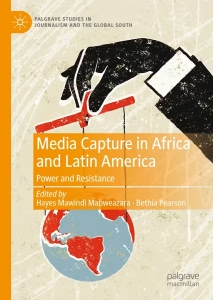
Media capture happens when media outlets lose their independence and fall under the influence of political or financial interests. This often leads to news content that favours power instead of public accountability.
What is media capture and how has it reshaped itself in recent times?
Media capture describes how media outlets are influenced, manipulated or controlled by powerful actors – often governments or large corporations – to serve their interests. It’s an idea that helps us understand how powerful groups in society can have a negative influence on news media.
While this idea isn’t new, what has changed is how subtly and pervasively it now operates.
These groups include big technology organisations that own digital media platforms – such as X, owned by xAI (Elon Musk), and Instagram and Facebook, owned by Meta. But it’s also important to consider Google as a large search engine that shapes the news content and audience of many other platforms.
This matters because the media are important for the functioning of democratic societies. Ideally, they provide information, represent different groups and issues in society, and hold powerful actors to account.
For example, one of the key roles of the media is to provide accurate information for citizens to be able to decide how to vote in elections. Or to decide what they think about important issues. One big concern, then, is the effect of inaccurate or biased information on democracy
Or it might be that accurate information is harder to access because algorithms and platforms make it easier to access inaccurate or biased information. These can be intended and unintended consequences of the technology itself, but algorithms can amplify misinformation and fake news – especially if this content has the potential to go viral.
So, what’s particular about media capture in the global south?
This is a really interesting question that is still being investigated, but we have some ideas.
First of all, it’s useful to know that media capture scholarship from the global north emerged around the time of the 2008 financial crisis. The influence of financial institutions on business journalists was one of the first areas of study.
Since then, research in the United States has focused on the capture of government-funded media organisations like Voice of America. And on how digital platforms like Google and Facebook can lead to capture.
In the Global South, scholars have drawn attention to the importance of large media corporations in understanding media capture. For example, in Latin America, there’s a high level of what’s called ‘media concentration’. This is when many media outlets are owned by a few companies. These companies often own companies in other sectors, which means that critical reporting on business interests presents a conflict of interest.
But to focus on Africa, scholars have drawn attention to governments as a source of pressure on journalists and editors. This can be through direct pressure or what we might call ‘covert’ pressure. Withholding advertising that helps to fund media outlets is an example, or offering financial incentives to stop investigating certain topics.
Researchers are also concerned about the influence of big tech in Africa. Digital platforms like Google and Facebook can shape the news and information that citizens have access to.
Can you share some of the studies from the book?
Our book includes many interesting studies – from Colombia, Brazil and Mexico in Latin America to Ethiopia and Morocco in Africa. We’ll share a few African cases here to give an overview of the issues.
The book’s contribution on Ghana warns us that although more overt ‘old’ types of media capture may have subsided, transitional democracies can feature messier, more nuanced forms of media control. This can be evident in government pressures and through capture of regulators.
In the Morocco chapter, we see the threat to media freedom presented by digital platforms owned by global tech giants. This is known as ‘infrastructural capture’. It means news organisations become dependent on tech giants to set the rules of the game for democratic communication.
Another compelling case is Nigeria, where researchers explore ties between media ownership and political patronage. The authors argue that the Nigerian press is failing in its democratic duty because of its reliance on advertising and sponsorship income from the state.
Added to this are ineffective regulatory mechanisms and close relationships with some big businesses that own newspapers and printing presses.
How can media capture be resisted in the global south?
The studies in the book show some ways forward and we do think it’s important to be optimistic! Resistance takes many forms. Sometimes it comes through legal and policy reform aimed at increasing transparency and media diversity. In other cases, it’s driven by social movements, investigative journalists and independent media who continue to operate under pressure.
The chapter on Uganda shows that journalist groups working with media advocacy organisations can strategically act to resist government media capture and harmful regulations.
For example, to push back against one legislative change, several groups formed a temporary network called Article 29 (named after the article in the Ugandan Constitution protecting free speech) and the African Centre for Media Excellence produced a report criticising the proposed changes.
One of the chapters on Ghana also shows how networks such as journalists, media associations, human rights groups and legal organisations can mobilise to push back against government influence.
These findings are echoed in Latin America, where research on Mexico and Colombia also found professional journalism to be a strong source of resistance.
The conversation must also include rethinking how we define capture itself. If we frame it only as total control, we risk missing the everyday ways influence operates – and the spaces where it can be resisted.
We would also say it’s really important that citizens are aware and alert to the issues when they think about how they access news media and what platforms they use. This is sometimes called ‘media literacy’ and is about people being more knowledgeable about where trustworthy new comes from.
Luc Pagbelguem, a video journalist for the private television station BF1, returned home on the night of 17 July 2025, the channel announced, expressing gratitude to ‘all those who contributed in one way or another’ to securing his release.
Both journalists were arrested in late February after publicly criticising the Burkina Radio and Television (RTB) and the Burkina Information Agency (AIB) during an AJB general assembly, calling them ‘propaganda tools’.
Their detention highlighted ongoing tensions between freedom of expression and the emergency measures enacted under the law on general mobilisation and public warnings
These developments are being seen as a positive signal for civil society, even as the country remains under national mobilisation with its accompanying restrictions.
The trial of Alpha Media Holdings (AMH) journalist Blessed Mhlanga commenced when he appeared before Magistrate Sheunesu Matova on charges of transmitting data messages inciting violence or damage to property.
Mhlanga is jointly charged with Heart and Soul TV (HSTv) general manager Olga Muteiwa. According to the NewsDay edition of 17 July 2025, the State presented evidence from Edmore Nyazamba, the officer-in-charge of CID Law and Order Harare, who stated that Mhlanga provided facilities to war veteran Blessed Geza to make utterances that incited a mass uprising against the government.
Nyazamba reportedly told the court that the journalist was communicating with Geza through X calls, which are private and cannot be easily intercepted. Mhlanga allegedly told the police that Geza arranged transport for him and his camera team to a venue where the interview was recorded.
Lawyer Chris Mhike argued that the State wrongly charged Mhlanga because he is not a director of HStv. Mhike told the court the alleged video does not implicate Mhlanga and that his client was being unfairly victimised.
The matter was deferred to 31 July 2025 for continuation of trial.
Outcome of the inaugural Annual General Meeting of the Network of Independent Media Councils in Africa
Arusha, United Republic of Tanzania
The inaugural AGM of NIMCA convened in Arusha from 14 to 16 July 2025 under the theme, ‘Advancing Media and Communication Regulations for Journalism Excellence in Africa’.
The gathering brought together 13 NIMCA media councils, as well as other journalism and media bodies, policymakers, civil society actors, academics, editors and international development partners from across Africa and beyond.
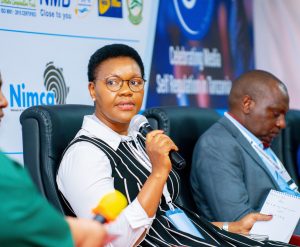
The AGM marked a significant milestone in the institutionalisation of NIMCA, following its formation in Cape Town in May 2024. Delegates agreed on constitutional provisions for the Network and elected its leadership as follows:
Delegates called on African governments to repeal laws that criminalise defamation, sedition and the publication of false information, and to adopt legislative and policy frameworks that strengthen independent journalism and freedom of expression, support media and information literacy, and promote the safety of journalists.
Advancing digital governance and information integrity
Recognising the rapidly evolving digital ecosystem, delegates expressed concern about the growing spread of misinformation and disinformation, algorithmic bias and opaque platform practices.
They endorsed UNESCO’s Guidelines for the Governance of Digital Platforms and the ACHPR’s three Resolutions on developing African digital rights guidelines for freedom of expression, access to information and information integrity, focusing on issues such as the accountability of technology platforms, fact checking, information integrity, public service content in the digital age, and access to data.
The meeting called for a continental approach to digital governance that is rooted in African realities, prioritises freedom of expression and embeds safeguards to uphold public trust and media integrity.
South Africa’s Phathiswa Magopeni, the new Board Chairperson of NIMCA
Responding to Artificial Intelligence and emerging technologies
Delegates noted the increasing use of AI in content creation and news curation, highlighting the ethical challenges this presents for accuracy, transparency and editorial independence. It called for the establishment of regulatory guardrails and newsroom-level practices that uphold journalistic standards while fostering innovation.
Promoting gender equity and disability inclusion
Delegates committed to institutionalising gender balance across all NIMCA governance structures and promoting inclusive media regulation practices.
The Summit stressed the importance of upholding disability rights and emphasised the need for accessible content, inclusive newsroom cultures and regulatory standards that reflect diverse lived experiences.
Strengthening media viability and sustainability
Acknowledging the financial precarity facing many media councils and newsrooms, delegates called for increased investment in public interest journalism and the development of innovative funding models for media regulation.
Participants urged media development partners to support the strengthening of regulatory bodies and fund research and innovation that contributes to media accountability and resilience.
Call to Action
NIMCA invites all voluntary self-regulation and statutory independent news content regulatory councils on the continent to join the network and collaborate in advancing rights-based, contextually-grounded regulatory models.
In the face of persistent threats to press freedom and information integrity, the AGM concluded with a resounding commitment to uphold the principles of editorial independence, transparency, inclusivity and public accountability
As Africa navigates complex challenges in the information ecosystem, NIMCA remains committed to building a media landscape where ethical journalism thrives, self-regulation is strengthened, and the public’s right to accurate, timely and diverse information is protected.
The NIMCA AGM was part of the proceedings of the 2nd Pan-African Media Councils Summit, hosted by the Media Council of Tanzania.
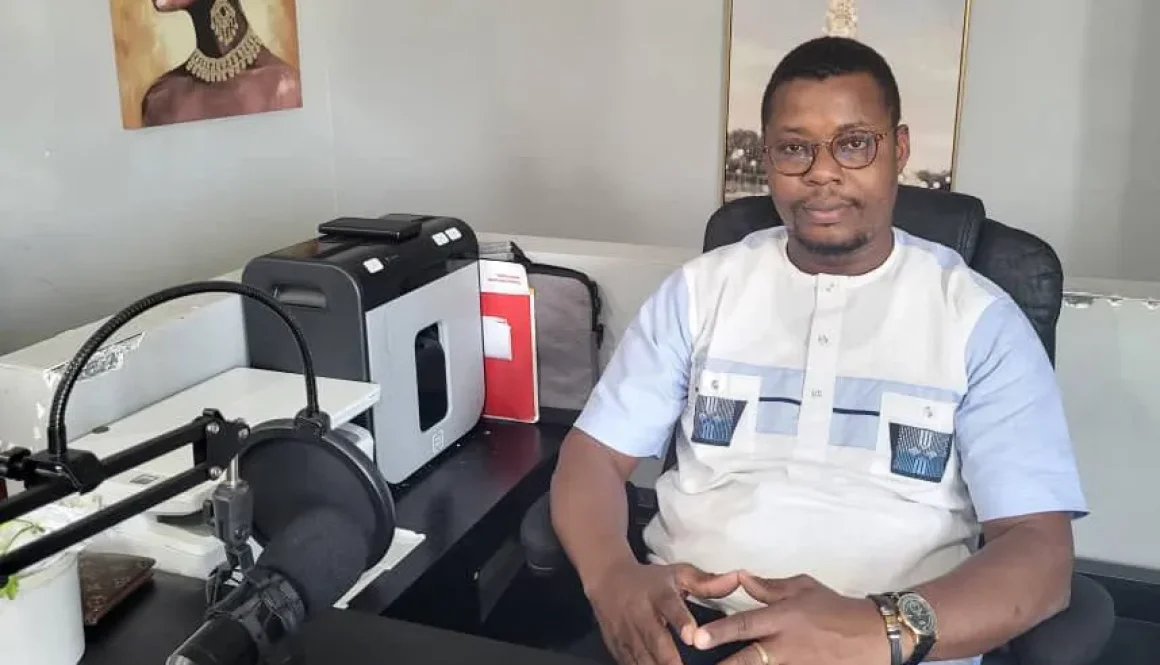
The Committee to Protect Journalists calls on the Beninese authorities to release Comlan Hugues Sossoukpè, Publishing Director of the banned online Beninese weekly newspaper, Olofofo Info, following his arrest in Côte d’Ivoire on 10 July. He was then extradited to Benin, despite his refugee status in Togo.
‘The forcible transfer of journalist Comlan Hugues Sossoukpè by Côte d’Ivoire to Benin, despite his refugee status in Togo, sends a worrying message to journalists across the region,’ said Moussa Ngom, CPJ’s Francophone Africa representative. ‘He must be released immediately and unconditionally. Such aggressive, transnational tactics illustrate a cross-border collaboration to muzzle a critical journalist.’
On 14 July 2025, a judge at Benin’s Court for the Repression of Economic Offences and Terrorism (CRIET) upheld Sossoukpè’s detention in the southern city of Ouidah, pending a judicial investigation on charges of inciting rebellion, inciting hatred and violence, harassing through electronic communication, and apology for terrorism, according to a copy of the decision seen by CPJ.
Sossoukpè was in Côte d’Ivoire to cover a government conference when he was arrested. He has been living in Togo since 2019 and has held refugee status there since receiving threats in Benin, where he is from, related to his work.
Sossoukpè told Maximin Pognon, his lawyer, who spoke to CPJ, that four people identifying themselves as Ivorian law enforcement officers and a fifth as a ‘colonel of the gendarmerie’ asked him to respond to a summons. But Sossoukpè recognised two of them as Beninese police officers, Pognon said.
Sossoukpè said he demanded that they bring him before a judge, which they agreed to, but did not. Instead, they seized his phone and computer, took him briefly to an Ivorian law enforcement headquarters, and then escorted him aboard a plane that took him to Benin
Two people close to the case who asked not to be named for privacy reasons said that during the days before his arrest, Sossoukpè had alerted his friends that there were kidnapping plans against him.
CPJ’s calls and WhatsApp messages to Andy Kouassi, Public Relations Director of the Ivorian Ministry of Communication, and to Wilfried Léandre Houngbédji, Spokesperson for the Beninese government, as well as CPJ’s email to the Ivorian gendarmerie, went unanswered.
This website uses cookies to improve your experience while you navigate through the website. Out of these cookies, the cookies that are categorised as necessary are stored on your browser as they are essential for the basic functionalities of the website. We also use third-party cookies that help us analyse and understand how you use this website. These cookies will be stored in your browser only with your consent. You also have the option to opt-out of these cookies. Opting out of some of these cookies may have an effect on your browsing experience.
Necessary
Always active
Necessary cookies are essential for the website to function properly. This category only includes cookies that ensures basic functionalities and security features of the website. These cookies do not store any personal information.
Preferences
The technical storage or access is necessary for the legitimate purpose of storing preferences that are not requested by the subscriber or user.
Analytics
Analytics cookies are used to track user behaviour on our website. We process these cookies to understand user engagement and improve user experience on our website.The technical storage or access that is used exclusively for anonymous statistical purposes. Without a subpoena, voluntary compliance on the part of your Internet Service Provider, or additional records from a third party, information stored or retrieved for this purpose alone cannot usually be used to identify you.
Marketing
The technical storage or access is required to create user profiles to send advertising, or to track the user on a website or across several websites for similar marketing purposes.


 When Ghanaian journalist Noah Dameh was relentlessly harassed – targeted by police, dragged to court, and driven to failing health – for exposing a business magnate’s exploitative monopoly over the Songor Lagoon salt mine on Ghana’s eastern coast, it was the Media Foundation for West Africa (MFWA) that took on his reporting to ensure he was not silenced, even after his death.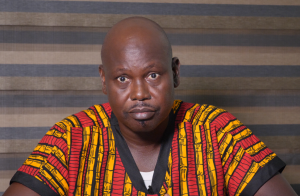
 A media company linked to Egyptian authorities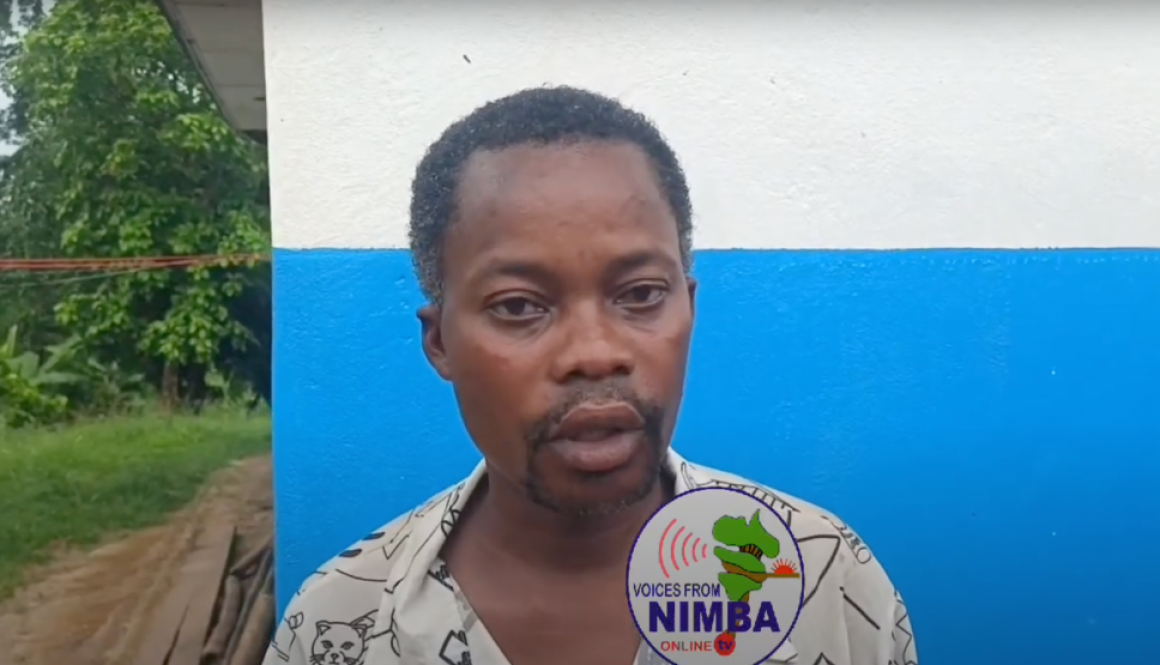

 At the close of the recent
 As a foreigner, it’s easy to land in trouble in Equatorial Guinea. A careless snap of a photo or a minor misstep in the maze of officialdom, with all its arbitrary permits and paperwork, quickly invites suspicion.

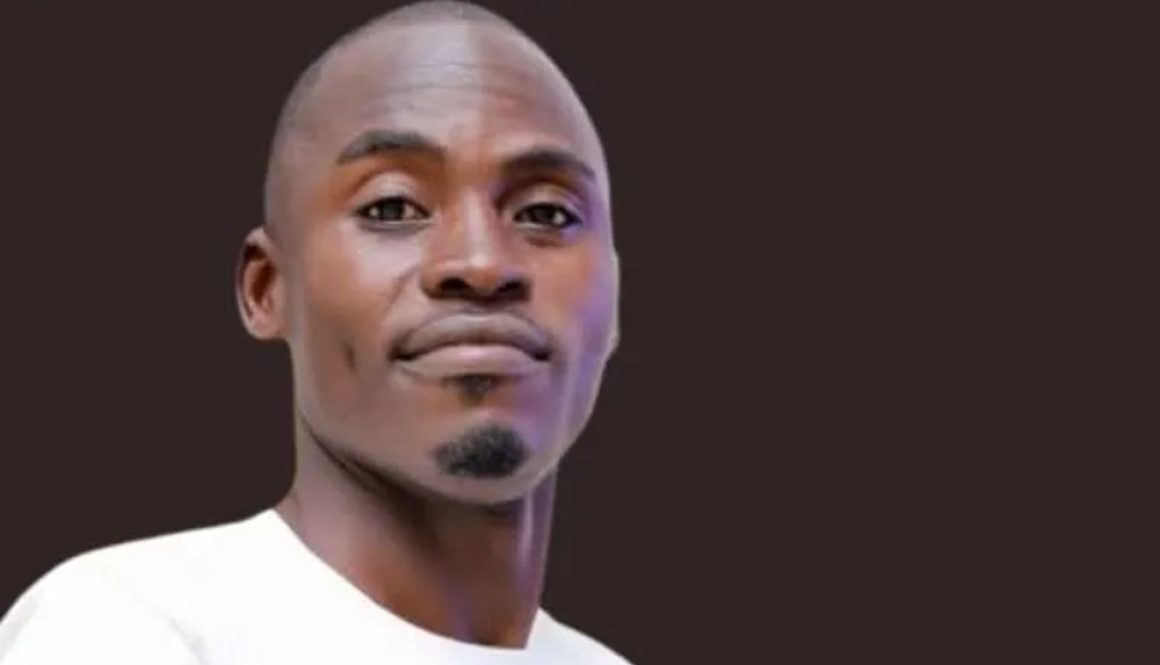
 Luc Pagbelguem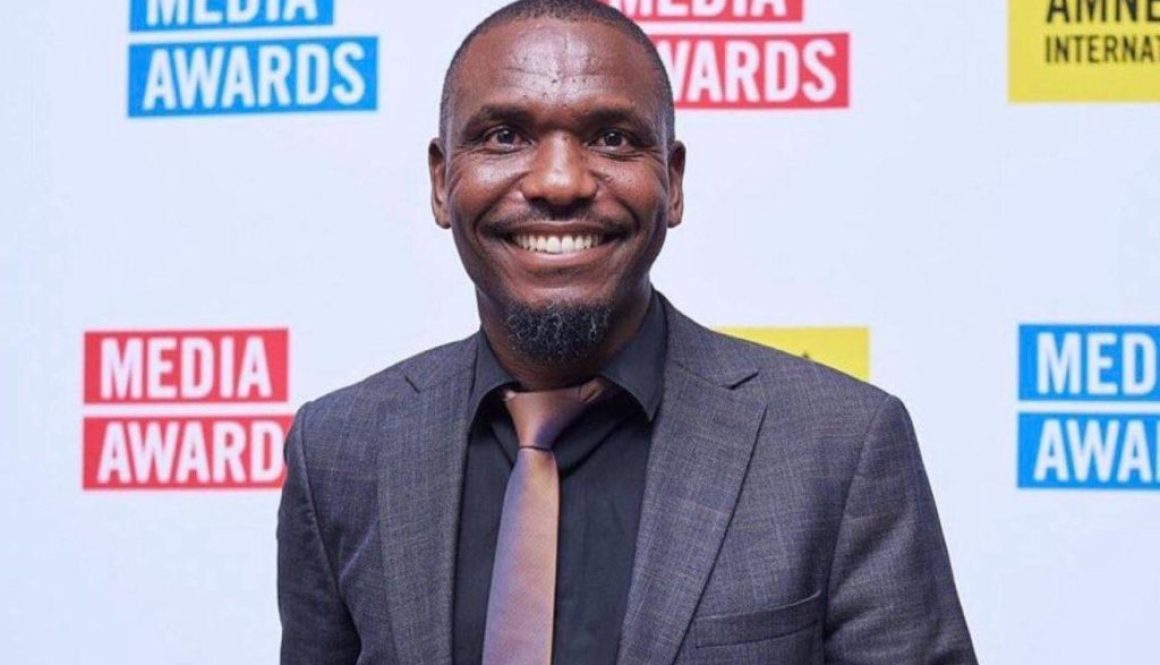
 The trial of Alpha Media Holdings (AMH) journalist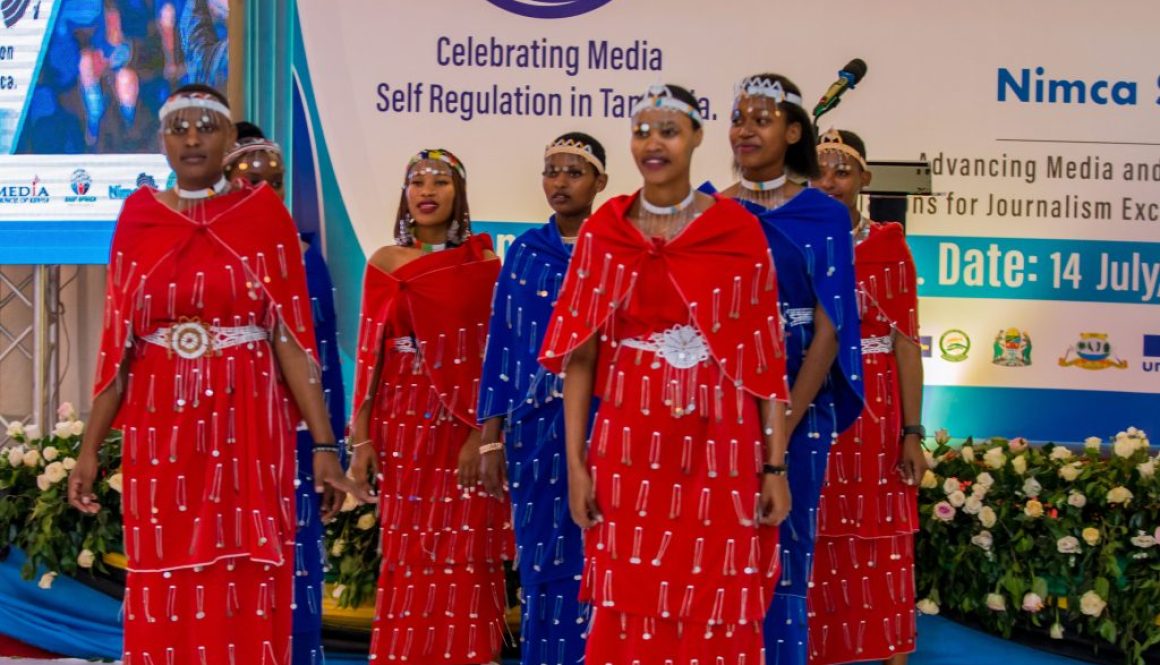
 Outcome of the inaugural Annual General Meeting of the Network of Independent Media Councils in Africa
 The Committee to Protect Journalists calls on the Beninese authorities to release